
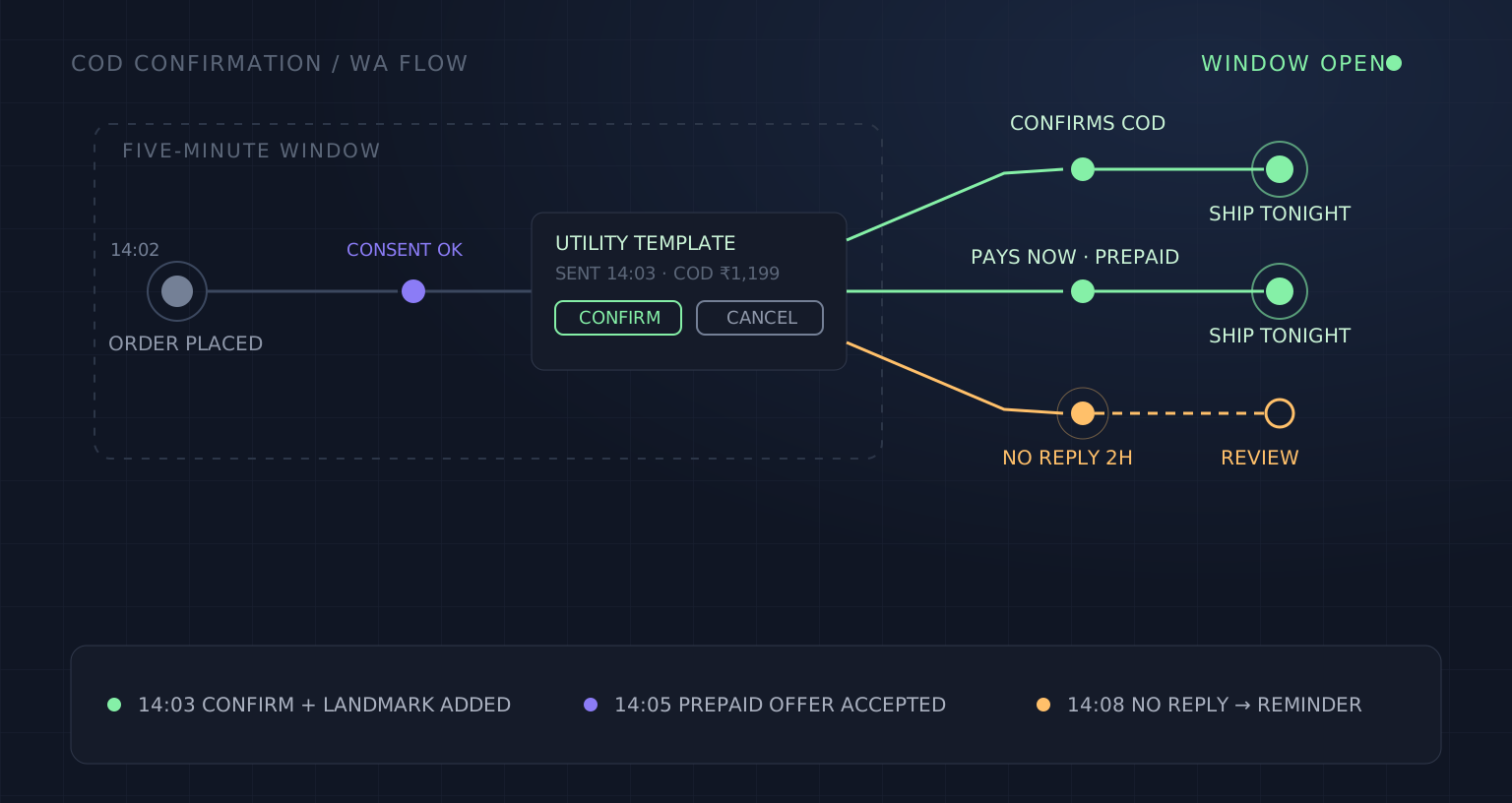
Cash on delivery keeps Indian e-commerce running, and it also produces most of its returns. In COD-heavy categories, 20-40% of orders come back to origin. A large share of that loss is decided before the parcel is packed. It is decided in the five minutes after the order is placed, when the buyer’s intent is still warm and their phone is still in their hand. COD confirmation on WhatsApp is the work done in that window: confirm the buyer meant to order, verify the address, and give them a reason to pay now instead of at the door.
Consider a mid-size D2C brand shipping 4,000 parcels a day, 60% of them COD. At a 28% RTO rate on the COD half, that is roughly 670 returns a day. At ₹150-₹250 of forward freight, reverse freight and handling per return, the leak is ₹1-1.7 lakh a day before the lost sales. Even a modest improvement in confirmation and COD to prepaid conversion moves real money at this scale.
The five-minute window
Three things fit inside the window, in this order.
- Confirm intent. A WhatsApp message goes out within a minute or two of the order: order summary, amount, delivery estimate, and two buttons — confirm or cancel. The buyer who placed the order by accident, or in two tabs, cancels now instead of refusing at the door. An honest cancel in minute five costs nothing. A refusal on day six costs both freights.
- Verify the address. The same message asks the buyer to confirm the address or drop a landmark. A share of COD failures are address-quality problems wearing an RTO costume: missing floor, wrong pin code, no landmark in a dense colony. Fixing the address before dispatch is cheaper than an NDR cycle with three failed attempts on Delhivery or Xpressbees.
- Nudge to prepaid. Offer a small incentive to pay now: ₹30-₹50 off, free shipping, or priority dispatch. The buyers who convert were going to pay anyway; you have removed their refusal risk and pulled the cash forward. Size the incentive against the ₹150-₹250 you spend on an average RTO, not against margin panic. For buyers who still need reassurance, partial COD and trust signals provide the next rungs instead of forcing an all-or-nothing choice.
Here is what the window looks like on one order. 14:02, a buyer in Patna places a ₹1,199 COD order for a kurti. 14:03, the confirmation message lands with the order summary and two buttons. 14:05, she taps confirm and adds a landmark: “near the water tank, second lane.” The address record is fixed before the pick list is printed. 14:06, the prepaid offer goes out — ₹40 off to pay now. She pays. The order ships that evening from the Delhi warehouse, and none of the 670 daily returns in the example above is this parcel. None of the steps needed a person, and each one had a person-shaped exit if the reply had been unusual.
Why WhatsApp and not SMS, email or a call
WhatsApp has over 500 million users in India, and open rates above 95% are common for transactional messages. The buyer already lives there. SMS still works for one-way updates, but reply rates are poor and there is no clean button flow. Email is where order confirmations go to be ignored. Outbound calling works but costs ₹15-₹30 per connected call, and it does not scale to festive-season volume without a hiring plan.
The second reason is structure. A WhatsApp utility template carries buttons and a payment link inside one message. Confirm, cancel, fix address, pay now. Every tap is a structured event your systems can act on, not a voice note someone has to transcribe into a tracker.
Consent, templates and the DPDP Act
Confirmation flows sit inside a regulated channel, and the rules are not optional. Three obligations matter.
- Consent first. You need the buyer’s opt-in to message them on WhatsApp, collected at checkout or account creation, and you need to store proof of it. The DPDP Act 2023 puts the burden of a clear, specific, revocable consent on you, not on the buyer.
- Utility templates, approved in advance. Order confirmation and address verification are utility messages. Templates must be submitted and approved before use, and the copy must stay transactional. Slip marketing content into a utility template and you risk re-categorisation, higher rates, and eventually a blocked number.
- Opt-out and data handling. Every flow needs a working opt-out, and the phone numbers and reply data you collect need a retention policy and a stated purpose. “We messaged them because they ordered” is a purpose. “We kept every reply forever in case it is useful” is not.
None of this is hard, but it is process work, and it belongs in the design of the flow, not in a cleanup after a complaint.
What confirmation data tells you
The replies are not just a filter on today’s orders. Accumulated over weeks, they are a map of where your RTO actually lives.
Confirmation rate and prepaid conversion by pin code will usually surprise you. A brand shipping Mumbai to Bengaluru may find healthy numbers, while a few pin codes in a tier-3 belt show low confirmation and high refusal. That is a courier allocation signal, a pricing signal, or a reason to make COD unavailable in a narrow zone instead of absorbing the losses quietly. Ekart may deliver one cluster well while another courier struggles there; the confirmation data is how you find out.
Repeat refusers are the other signal. A buyer who has refused twice and confirmed zero times is a different risk from a first-time buyer. Order-level rules follow naturally: prepaid-only for repeat refusers, manual review for high-value COD to low-confirmation pin codes, normal flow everywhere else. The point is not to punish buyers. It is to stop paying double freight on orders you could have predicted.
Where automation fits, and where people stay
The flow itself is automatable, but the safe sequence is the same one that works everywhere else in operations. First, map the current process: how confirmation happens today, how long orders wait, what share of cancellations arrives after dispatch. Second, run the automation in Shadow mode: it drafts the messages and the order-level decisions, people send them, and the drafts are scored against what the team actually did. Third, move to approval: messages and prepaid nudges go out behind a human check for the categories still proving themselves. Only the categories with a long accuracy record — the routine confirm, the standard reminder, the address fix — run automatically within limits the team sets.
Timing is a policy choice, not a default. Night orders between 23:00 and 07:00 often perform better messaged in the morning. Reminder cadence — one reminder at two hours, then stop — is yours to set, measured against block rates and spam complaints. During Diwali sale weeks, when volume doubles, the same limits keep the flow from turning into a spam cannon aimed at your own buyers.
What this does not fix
Confirmation cannot fix a bad product page. If buyers refuse because the parcel does not match the photos, no message flow will save the order; it will only give you cleaner data about the refusal. It cannot fix courier performance either. A confirmed order that arrives nine days late on a slow lane still gets refused, and that is a courier allocation problem, not a confirmation problem.
And some buyers will never reply. In many categories, 15-25% of COD buyers ignore every message. Those orders still need a decision — ship or hold — and that decision belongs to a rule your team sets, not to the automation. Consent records, template discipline, incentive budgets and the ship-or-hold policy all stay with people. The automation carries the volume; the judgment stays where it belongs.
COD confirmation on WhatsApp is unglamorous work: one message, three questions, a small incentive. Done consistently, in the five minutes when it matters, it is one of the cheapest RTO levers an Indian e-commerce operation has.
If you want your own number before anything else: the RTO cost calculator turns your orders, COD share and RTO rate into the monthly leak in about ten seconds.