
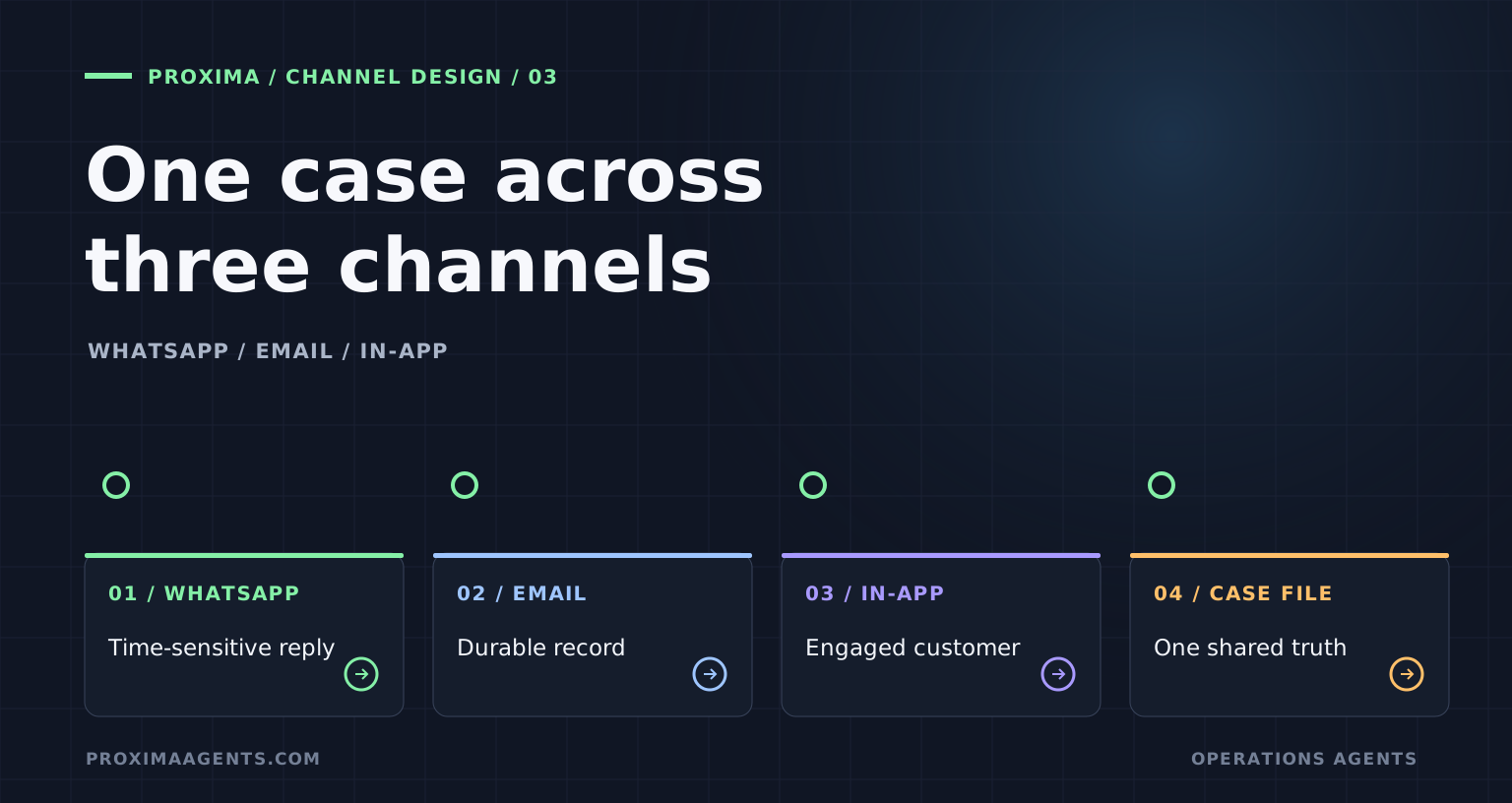
So far in this series we have stayed inside workflows: recovering NDR cases before they become RTO, answering WISMO tickets from scan data, escalating the cases that need a human. Each of those workflows ends in a conversation with a customer, and that conversation has to happen somewhere. In India, “somewhere” is a real decision with real constraints — not the generic “meet customers where they are” advice, but a per-workflow choice with cost, consent and response-time math behind it.
The three channels, honestly assessed
WhatsApp is where Indian customers actually are. For many Indian buyers it is a practical channel for time-sensitive replies, though reach and response rates must be measured for the specific customer base. It is conversational by design, which matters when the workflow needs an answer back: “when will you be home?” is a WhatsApp question. It supports templates, buttons and lists, so a structured choice (“confirm tomorrow 10:00-12:00 / change my address / cancel”) can be a tap instead of a typed sentence. The constraints are real: business-initiated messages outside the customer-service window require approved templates, and Meta prices delivered messages by category and recipient market. Check opt-in, platform rules and the applicable Indian privacy requirements before sending. WhatsApp also punishes low-quality messaging with quality-rating downgrades, so a brand that spams loses the channel itself.
Email can serve as a durable record. It carries invoices, policy documents, refund confirmations and anything a customer might need to forward or search later. Email response times can be too slow for a courier cutoff, so test actual response latency before using it for recovery. It can be useful for formal artifacts and follow-up, subject to deliverability and sending limits.
In-app and on-site notifications give a brand more control over presentation and timing, though delivery infrastructure still has costs and dependencies. The catch is reach: push notifications require an installed app and permission, while on-site messages require a visit. In-app works well for engaged repeat customers and post-purchase tracking surfaces, but a time-critical recovery workflow needs a channel the recipient is likely to open.
Match the channel to the clock
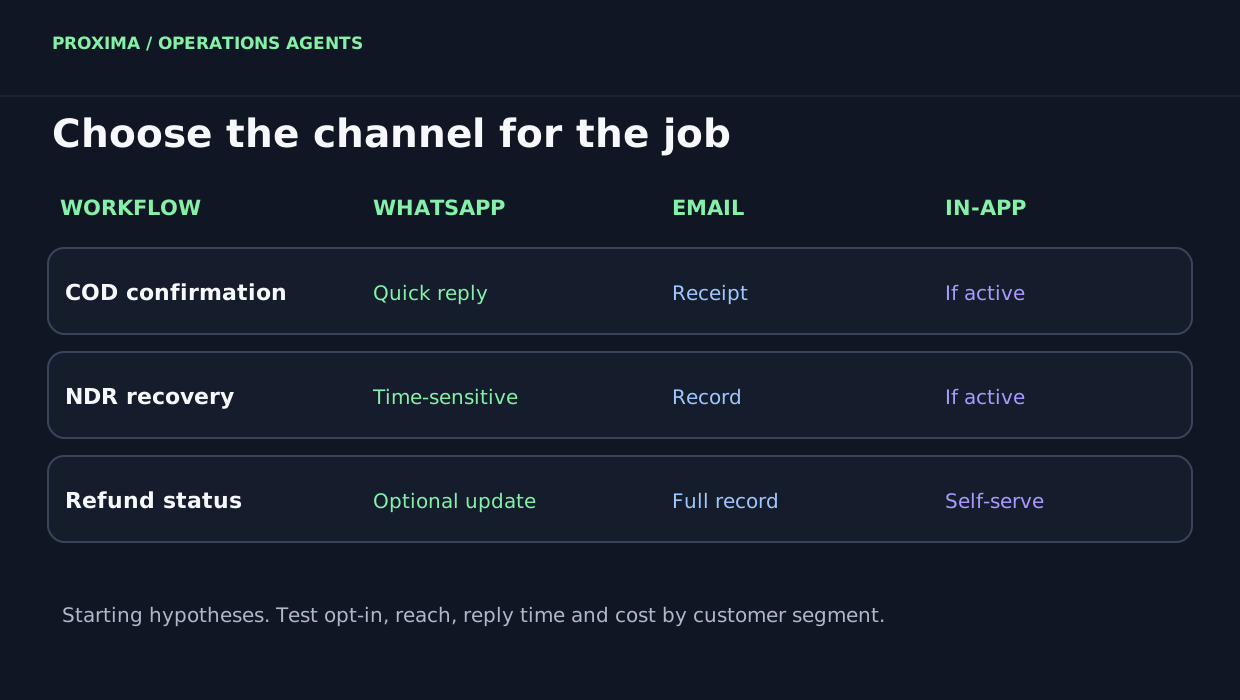
The deciding question is not “which channel do our customers prefer” in the abstract. It is “how much time does this workflow have, and does it need a reply?”
COD confirmation often belongs on WhatsApp when the customer has opted in and the brand can get timely replies. The whole thesis of the five minutes after the order is that intent is freshest while the phone is in the buyer’s hand. An email confirmation read six hours later confirms nothing. The reply is the point — confirm intent, verify the address, offer the prepaid switch — so the channel must be conversational and instant.
NDR recovery can also use WhatsApp when consent and reachability allow it, because the recovery window can close quickly after a failed attempt. The message needs a structured reply (available slot, corrected landmark, COD ready) in time for the carrier cutoff. A call or another channel may be needed when the number is unreachable.
Proactive delay and status updates split by urgency. A delay that breaks the promise date deserves WhatsApp, because silence is what generates the anxious ticket two days later. Routine milestone updates — shipped, reached your city, out for delivery — can ride in-app or email for engaged customers, and WhatsApp for everyone else if the messaging budget allows.
Refunds, disputes and policy-heavy conversations belong on email or a tracked in-app thread. These conversations need documentation, they stretch over days, and the customer may need the record. A refund timeline buried in a chat scroll serves nobody.
Complaints should be accepted on every channel they arrive on — an angry customer will not respect your routing preferences — and then moved to whichever channel can carry the resolution properly. The intake is the customer’s choice. The resolution path is yours.
The orchestration rule: one conversation, many surfaces
The failure mode to avoid is not picking the wrong channel — it is running all three as separate conversations. The customer who gets a WhatsApp about their NDR, an email about the same parcel an hour later, and an app notification that contradicts both is experiencing your ops stack as noise. Channel orchestration means one case file behind every message: whatever the customer replied on WhatsApp at 11:40 is visible to the agent answering their email at 14:00, and no workflow sends a second nudge on channel two before the reply window on channel one has closed.
A sensible cascade for time-critical workflows: WhatsApp first, with a defined reply window; a follow-up nudge inside that window; then SMS or a call attempt for high-value orders; email always running in parallel as the record, never as the nudge. In-app handles the customers who live there anyway. The channel mix is a per-brand tuning exercise — metro prepaid customers behave differently from tier-3 COD customers — but the principle holds: lead with the channel where replies happen in minutes, keep the channel of record underneath, and never let the same case speak with two voices.
What this does for the agent design
Channel choice shapes the agent itself. A WhatsApp-native agent handles short structured turns, buttons and replies; its answers must fit a chat bubble and end in a question or an action, not a paragraph. An email agent writes complete, self-contained messages a customer can read cold three days later. The retrieval and reasoning underneath are shared — the same scan data, the same case file, the same limits — but the composition layer is channel-specific, and bolting WhatsApp brevity onto an email pipeline (or the reverse) produces messages that feel wrong on both.
The phased rollout works per channel too. A category can earn autonomy on WhatsApp — where replies are structured and outcomes are measurable within hours — before it earns autonomy anywhere else. And the escalation paths have to survive channel boundaries: a case that starts in WhatsApp and escalates to a human must hand over the full thread, not a ticket number and a shrug.
What this does not fix
Channel strategy cannot compensate for bad data. WhatsApp reaches customers only if the number collected at checkout is real and WhatsApp-active; brands that discover many of their COD phone numbers are unreachable have an address-capture problem, not a channel problem. It also cannot repeal consent law. Template rules, customer preferences and applicable privacy duties constrain what you may send and to whom, and a brand that treats those as friction will lose the channel — WhatsApp’s quality enforcement is faster than any regulator.
And no channel mix fixes a broken promise. If parcels are routinely late, better-timed messages on better channels just deliver the bad news more efficiently. The channel is the last mile of an operational workflow, not a substitute for one. Choose it per workflow, respect its rules, measure replies instead of sends — and the conversation finally happens where the customer can actually take part in it.