
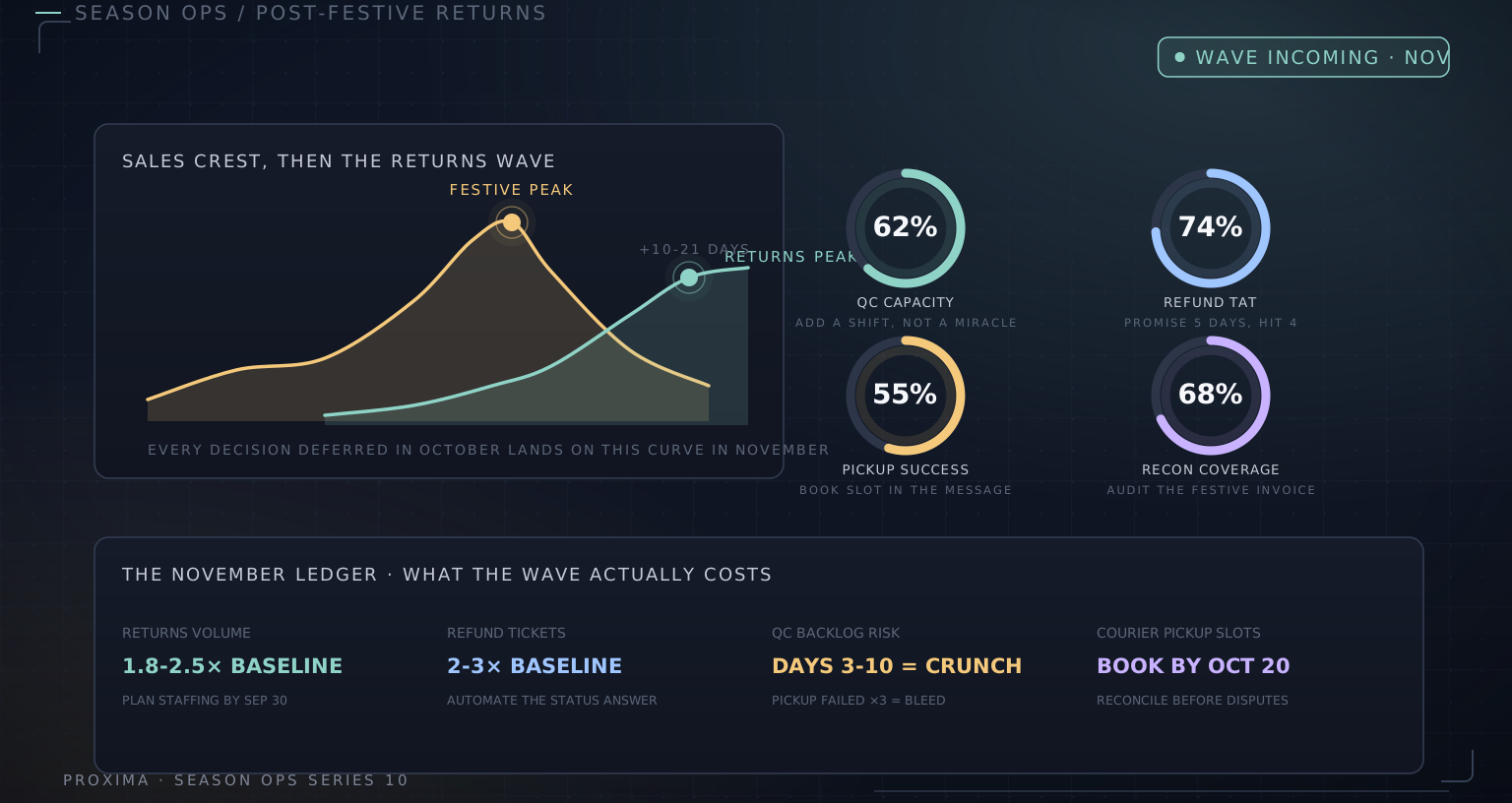
The festive logistics conversation in India is all October: warehouses, courier allotments, COD confirmation flows, the whole readiness stack. Then Diwali passes, the sale numbers get celebrated, and ten days later a different wave arrives: the returns. Orders bought in impulse and gift-duplicated and size-guessed come back at 1.8-2.5× the usual rate, stretched over three weeks, landing on a team that is tired and an ops stack sized for normalcy.
November separates brands that prepared the back half from brands that only prepared the front. The difference is not heroics during the wave — it is about four decisions made by mid-October, while there is still slack to make them in.
Read the shape of your own wave
Your history contains the forecast. Returns from festive orders start climbing 7-10 days after the first big sale day, peak around days 10-21, and tail into December. The mix shifts too: exchange requests rise (size-heavy categories), wrong-gift returns appear (duplicate purchases), and “did not like it” peaks after the gifting occasion passes. Pull last year’s data by day and category, scale it to this year’s sale volume, and you have the curve your bench, your courier slots and your refund pipeline must survive. If last year’s data is thin, your category peers’ shape is close enough: it is a wave, not a spike, and the second week is usually the worst.
The four dials to set in October
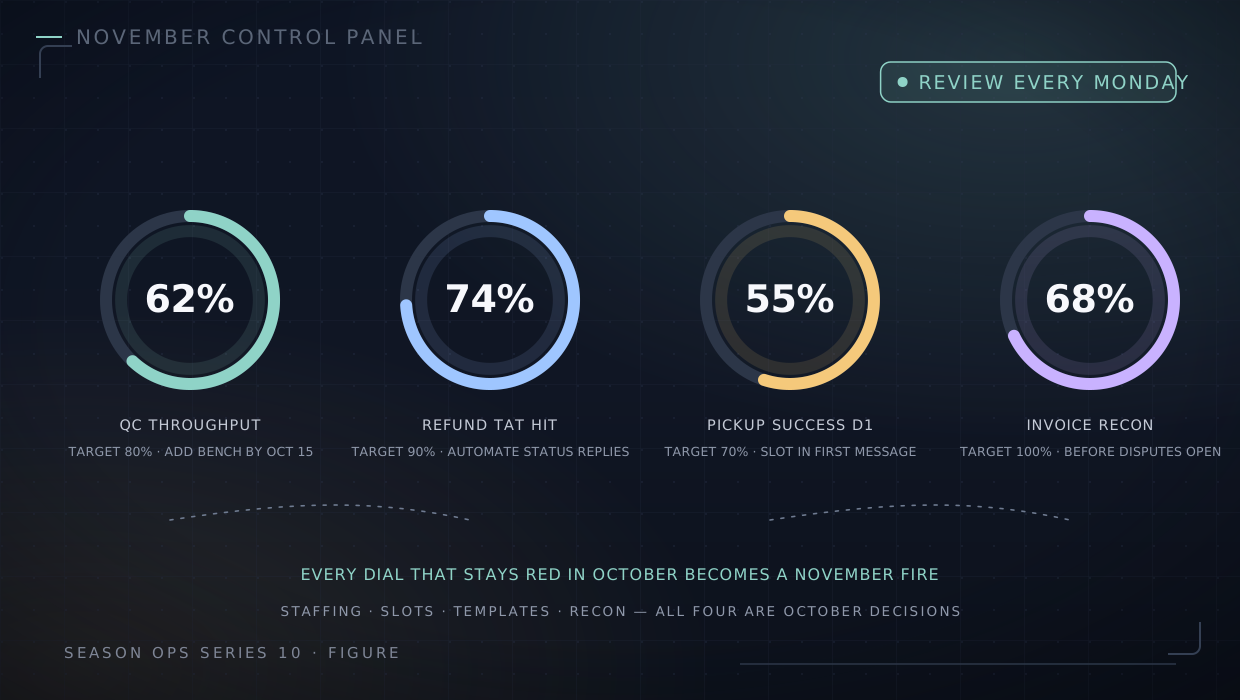
QC capacity
The returns pipeline chokes at the bench, and a choked bench converts directly into refund TAT misses and dispute anger. Work the arithmetic: expected returns per day at peak, times your bench throughput (commonly two-three parcels per bench per hour with checks and photos), against benches × shifts. Add a shift before you add headcount — trained temps at the bench in week two of November are a fantasy; the same temps trained in the last week of October are an asset. Build the photo-at-inspection discipline in October, because November is the wrong month to teach evidence habits.
Refund TAT
Decide the promise now, and make it survive the wave: pick the number your worst November day can hit, not your best September day. If the honest number is 5-6 working days at peak, promise 7 — a promise kept beats a promise broken by one day. Then automate the status communication, because refund queries arrive at 2-3× volume right when the team has no slack, and a dated answer costs a rupee where a ticket costs ₹65. The refund-status automation should be in shadow mode by late September, approved by mid-October — this piece is being published in September precisely so that sequence is still possible.
Reverse pickup slots
Courier networks allocate their best capacity to forward deliveries through the sale and its echo — reverse pickups get the leftovers, exactly when your returns volume peaks. Book capacity conversations by October 20, not after the first failed-pickup storm. Push first-attempt success up with the mechanics that work year-round, mattering double now: slot-in-the-first-message, drop-off options surfaced early, addresses re-verified inside the return confirmation. And set the failed-attempt policy in advance: after two failures, what happens is a rule, not a judgment call made in a queue at 9pm.
Reconciliation coverage
The least glamorous dial and the easiest to skip. The festive months produce the year’s fattest courier invoices, with the year’s most generous drift: weight rounding at scale, zone updates nobody announced, festive surcharges that outlived their dates, COD remittance timing that quietly stretches. Run the freight audit loop on October’s invoice while November’s wave is still forming — the dispute windows are 15-30 days, and the money is real: 1-2% of the festive freight spend, recovered only if someone does the rows in December. Skipping it is donating the recovery to rounding error.
The Monday review
From mid-October, one page, every Monday: the four dials against targets, the wave’s leading indicators (return requests per day vs forecast, days-to-QC, refund TAT hit rate, pickup day-one success), and one decision per red dial. Six weeks of that cadence is the difference. The teams that skip it are not lazier — they simply meet the same dials in November, red, with no slack left to turn them.
There is a second-order prize hiding here. November is when trust is won cheaply: the brand that picks up on day one, refunds on day four with updates throughout, and answers “where is my refund” with a date is remembered all year by exactly the customers who were already nervous. The proactive notification habit and the refund-status automation are not cost lines in November — they are the January repeat-purchase curve being decided in advance.
What not to do
Do not staff the wave with judgment calls — exceptions decided ad hoc in November become permanent policy by January, and most of them are bad. Do not “pause returns” or quietly stretch promises without announcing it; the silence converts a delay into a chargeback. And do not treat the wave’s end as the finish line: the returns tail and the invoice disputes run into December, and the teams that stop reviewing dials in week three give back a chunk of what the first two weeks earned.
The festive sale is a sprint with a known finish line. The returns wave is the same race, run backwards, uphill, ten days later — and it rewards the same thing: preparation done while it was still optional.