
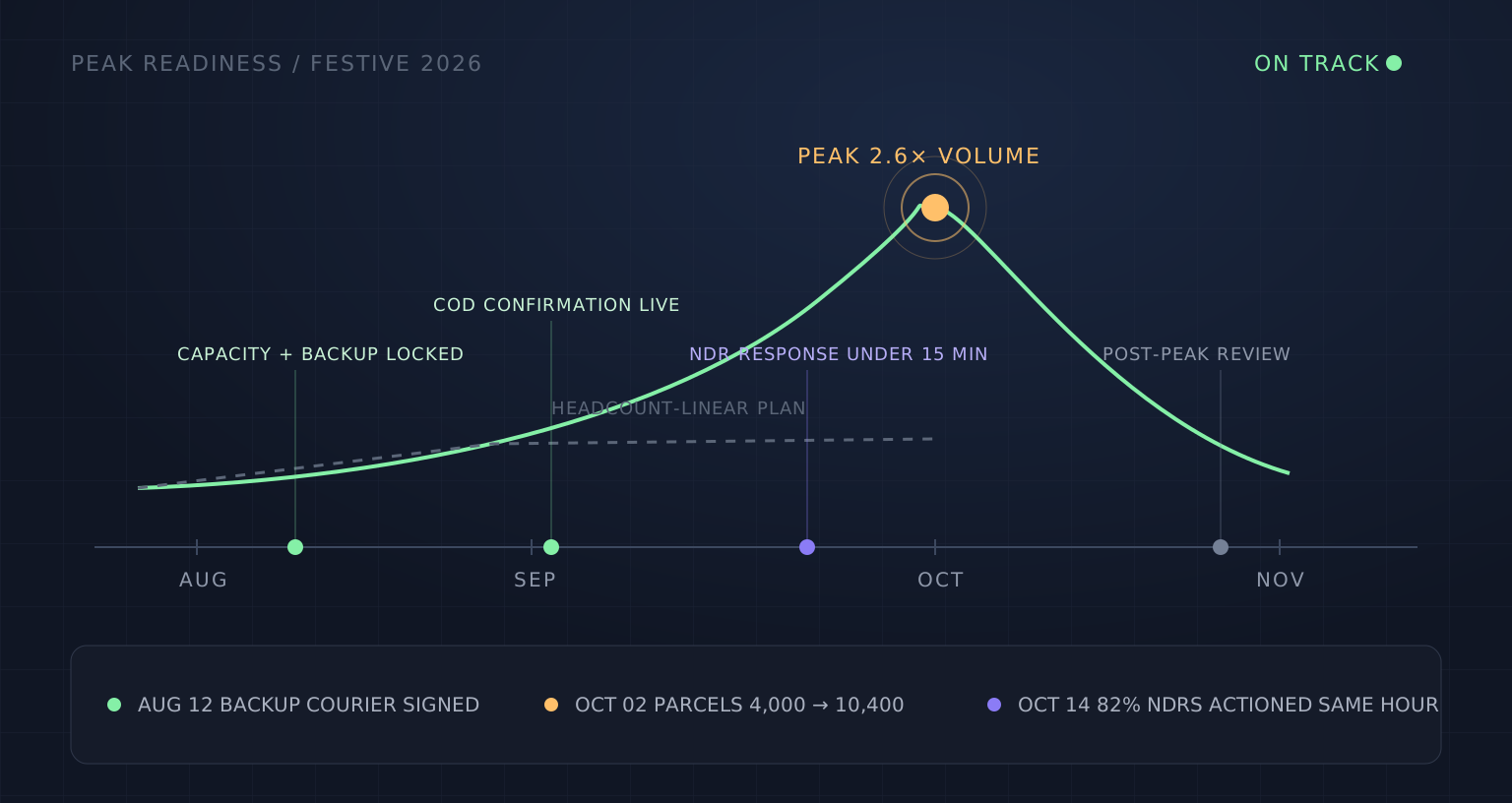
For six to eight weeks every year, Indian e-commerce stops being linear. The Diwali sale period, and the marketplace events around it, doubles or triples daily parcel volume for most D2C brands and 3PLs. Consider a mid-size brand shipping 4,000 orders a day in August. By the second week of October, that same brand is dispatching 9,000 to 12,000. The warehouse copes; volume there scales with shifts and space. What breaks is everything that scales with headcount: NDR follow-ups, COD confirmations, WISMO tickets, exception chasing, courier escalation.
The default response is temp hiring. It is also the first thing that fails. This post is a readiness checklist for festive season logistics in India, timed from August, because the decisions that determine how your October goes are made eight to ten weeks before the first sale banner goes up.
Why temp hiring breaks first
Three reasons, and none of them are about effort. The first is ramp time. A new coordinator takes two to three weeks to learn your couriers, your escalation paths and your exception categories. Hire in late September and the team reaches full speed in mid-October, exactly when you needed them already fast, and roughly when the peak starts winding down.
The second is error rate. New staff raise the exception rate while lowering the follow-up quality on the exceptions that already existed. A missed COD confirmation becomes a return to origin (RTO). A slow NDR response becomes an RTO. On a typical COD parcel, RTO costs ₹150-₹250 in forward and reverse freight plus handling, before the lost sale itself. At festive volume, a two-point rise in RTO on 10,000 parcels a day is 200 extra returns a day.
The third is the maths of headcount-linear operations. If follow-up work scales with parcels, and parcels go up 2.5x, you need 2.5x the coordinators for six weeks. Nobody hires that. So the real plan becomes “the same team works longer hours,” and the queue quietly becomes the plan. NDRs wait overnight. Customers call in. RTO climbs through the exact weeks when order value is highest.
The readiness checklist, timed from August
Five workstreams, in the order they need to start. Each one has a deadline tied to the peak, not to the calendar.
- Courier capacity and backups, 8-10 weeks out. Lock committed daily volumes with your primary courier, whether that is Delhivery, Xpressbees, Ekart or Blue Dart, and get the festive surcharge terms in writing. Sign a backup courier rate card for your top lanes, say Delhi-Bengaluru and Mumbai-Jaipur, before you need it. In October, couriers ration capacity to whoever committed first.
- COD confirmation coverage, 6-8 weeks out. Measure what share of COD orders gets a confirmation message today. COD-heavy categories run 20-40% RTO, and confirmation on WhatsApp with a prepaid nudge is the cheapest lever against it. Templates and consent flows take weeks to approve, which is why this starts in August.
- NDR response time, 4-6 weeks out. Pull your current median time from NDR event to customer contact. Couriers make about three delivery attempts before marking RTO, so every return starts as an NDR with a recovery window. If your median response is measured in hours or days, that is the number to fix before the peak triples your daily NDR count.
- Exception ownership, 2-4 weeks out. Every exception category gets one owner and one written playbook. The test is simple: at 21:00 on a peak Tuesday, no case sits unowned. If ownership today lives in WhatsApp threads, it will not survive two and a half times the volume.
- Support deflection, 2 weeks out. WISMO (“where is my order”) tickets grow faster than parcels during sale events, because customers who just spent festive money are the most anxious. Proactive delivery updates and self-serve tracking answers should be live and load-tested before the first sale day, not during it.
What to automate before the peak, and what to keep manual
The rule for peak season ecommerce operations is stricter than the rule for the rest of the year: automate only routine, proven actions, and freeze everything new by mid-September. August and September are for testing. A system can read the same courier events your team sees and suggest actions without acting on them (Shadow mode), then run the accurate categories behind a supervisor’s approval. By the time volume arrives, the approval history tells you exactly which categories are safe to run automatically within agreed limits.
The categories that earn their place before the peak are the boring, high-volume ones: COD confirmation and prepaid nudges on WhatsApp, first response on NDRs, missed-scan follow-ups with couriers, WISMO answers, proactive delay updates to customers. Each one is routine, reversible, and measured. What stays manual, permanently: high-value RTO decisions, damaged-goods disputes, courier SLA escalations, and any commitment to a customer that is not in the playbook. Peak season is the worst possible time to find out an automated action was wrong.
Here is what a proven category looks like in the second week of October. 14:20, a courier portal logs a failed first delivery on a COD parcel headed to Jaipur, one of 1,700 NDRs that day. 14:21, the customer gets a WhatsApp message asking whether to re-attempt tomorrow morning or deliver to a neighbour, because the NDR first-response category cleared its accuracy gate in September and now runs automatically. 14:26, the customer picks tomorrow morning. The re-attempt is filed with the courier the same hour, the parcel stays out of the RTO stream, and no coordinator touched the case. Multiply that by a thousand routine cases a day and you see where the temp hires were supposed to go. The supervisors spend their peak hours on the 5% of cases that actually need judgment.
The week after Diwali
Book the post-peak review before the peak starts, for the first or second week of November. Four questions. Which checklist items held, and which broke, with numbers rather than impressions. What the actual RTO and NDR profile looked like against the August baseline, and what each recovered NDR saved at ₹150-₹250 a parcel. Which automated categories stayed accurate under triple volume, and which ones graduate to less supervision as a result. And what goes into the written playbook for the next peak, because there is always a next one: year-end sales are weeks away, and the big marketplace events return every year.
The review is also when the temp-hiring comparison becomes honest. The team that carried the peak was the August team plus proven automation, not a team twice the size. That is the number to take into next year’s budget conversation.
Returns and refunds peak after the sale, when temporary labour is leaving and courier invoices are arriving. Set the QC capacity, reverse-pickup slots and refund promise before then; the post-festive returns plan turns the November review into an operating checklist.
What this does not fix
No checklist creates trucks. If courier capacity in your lanes is genuinely exhausted, that is a commercial problem of allocation, pricing and commitments made months earlier, and software does not solve it. The same applies to demand that lands far above plan, marketplace flash events that move dates on you, and weather or infrastructure disruptions during the peak weeks themselves.
Automation also stays inside routine, proven paths. Confirmations, first responses, follow-ups and customer updates within agreed limits are candidates. Judgment calls stay with your supervisors, who set the limits and can tighten them at any time. Festive season logistics in India rewards the teams that start boring work early. August is early. October is not.
The checklist in this post also exists as a printable festive readiness checklist — same timeline, laid out to print or save as a PDF and pin to the ops wall.